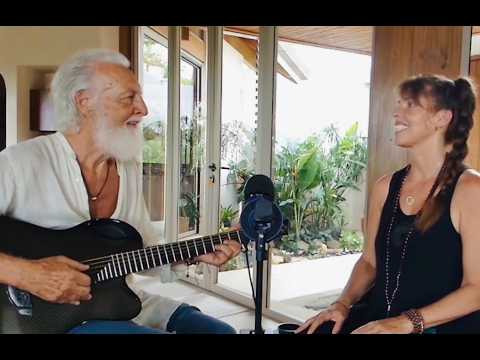
The White Tara mantra is a Sanskrit chant rooted in Tibetan Buddhist tradition that invokes compassion and liberation from suffering while cultivating merit, wisdom, and longevity. Through sound-based healing practices, this mantra harnesses vibrational frequencies to support physical wellbeing, mental clarity, and spiritual development. Miten and Deva Premal have composed and recorded a contemporary version that makes this ancient practice accessible to modern practitioners, emphasizing how mantra meditation works through repetition, intention-setting, and the purifying power of sacred sound.
What Is the White Tara Mantra?
The White Tara mantra—Om Tare Tu Tare Ture Mama Ah Yuh Pune Jana Putim Kuru Soha—is a Sanskrit invocation from Tibetan Buddhist tradition. Tara, known as the "mother of liberation," represents the feminine principle of compassion and swift action in removing obstacles. The white form of Tara specifically embodies longevity, healing, and the transcendence of fear.
The mantra's opening syllable, "Om," is the primordial sound of creation in Hindu and Buddhist cosmology. "Tare" invokes Tara's saving grace, while the repeated "tu tare ture" creates rhythmic layers that deepen the invocation. The phrase "mama ah yuh pune jana putim kuru soha" translates roughly to a request for compassion and the cultivation of merit, wisdom, and a long, healthy life. The final "soha" (or "svaha") means "so be it"—a sealing of the intention.
How Does Sound Healing Work in Mantra Practice?
Sound healing operates on the principle that vibrations affect both the physical body and subtle energy systems. When practitioners chant the White Tara mantra, they are not merely reciting words—they are engaging with frequencies that are believed to resonate with specific chakras and organs. Neuroscientific research has shown that chanting and vocalization can activate the parasympathetic nervous system, lowering stress and promoting relaxation.
Each syllable of the mantra carries vibrational properties. The "a" and "u" vowels are associated with opening and expansion, while consonants like "t" and "r" create grounding focal points. By repeating the mantra with awareness and devotion, practitioners establish a feedback loop between sound, breath, and intention. This repetition trains the mind to settle into coherence, reducing mental chatter and anxiety.
The White Tara mantra specifically emphasizes longevity and healing. In traditional Tibetan medicine and yogic systems, longevity is not merely about extending years but about cultivating vitality, clarity, and spiritual development. The sound frequencies of this particular mantra are thought to support immune function, cellular regeneration, and the nervous system's capacity to heal itself.
What Is the Role of Intention in Mantric Chanting?
Intention shapes how mantra works. The description states that White Tara "shines a light upon me, creating an abundance of merit and wisdom for long life and happiness." This phrasing reveals the dual intention embedded in the practice: external (invoking compassion from the divine) and internal (cultivating one's own merit and wisdom).
Merit, in Buddhist philosophy, refers to positive karma generated through virtuous action, generosity, and mindfulness. Wisdom refers to direct insight into the nature of mind and reality. By chanting the White Tara mantra with the intention of accumulating merit and wisdom, practitioners align their inner work with these spiritual values. This is not magical thinking—it is a form of psychological and spiritual conditioning that trains consciousness toward desired states.
When chanting for longevity, the intention is not to deny mortality but to optimize the quality and purposefulness of life. Long life in Buddhist practice means more time for spiritual development, service to others, and the completion of meaningful work. The mantra invokes Tara's compassion precisely because addressing suffering (inherent in the human condition) is understood as prerequisite to cultivating joy.
Understanding Tara and the Liberation of Suffering
Tara is known in Tibetan Buddhism as the "Liberator of Suffering." She is depicted as alert, compassionate, and ready to act. Unlike some deities associated with transcendence or withdrawal, Tara is actively engaged with the world's pain. The white form of Tara particularly resonates with the dissolution of fear and the illumination of darkness—metaphorically and literally.
In the mantra, the invocation of Tara is a request for Her intervention and guidance. The chanter is not expecting an external savior but rather calling upon the archetypal qualities Tara represents—compassion, discernment, swiftness in removing obstacles—within their own consciousness. This is why mantra is sometimes described as self-transformation rather than petition.
The phrase "creating an abundance of merit and wisdom" points to a specific spiritual mechanism: by aligning oneself with Tara's compassion, the practitioner becomes a conduit for merit-making. This might manifest as increased patience, generosity, clarity in decision-making, or a heightened ability to serve others. These qualities, in turn, extend one's influence and well-being beyond the self.
The Sacred Sound in Modern Wellness Contexts
Contemporary research into mantra and sound therapy has documented measurable benefits. Studies show that chanting mantras can lower cortisol (stress hormone), reduce blood pressure, and increase coherence in heart-rate variability. The White Tara mantra, through its specific syllabic structure and the intention-setting embedded in its recitation, can serve as both a meditative anchor and a healing tool.
For practitioners working with longevity explicitly—whether managing chronic conditions, supporting recovery, or simply cultivating resilience—the mantra offers a multi-layered approach. The repetition provides a focal point for attention (meditation). The vibration supports nervous system regulation (sound healing). The intention aligns consciousness with aspirational values (psychology and spirituality).
The composition by Miten and Deva Premal, available on their album "Timeless," translates this ancient practice into a contemporary sonic form. By combining traditional Sanskrit chanting with modern musical production, they make the practice accessible to listeners who may not have studied Tibetan Buddhist texts or Sanskrit but who recognize the value of contemplative sound.
How to Engage with the White Tara Mantra
Practitioners can work with the White Tara mantra in several ways. The simplest approach is listening to the recording while maintaining an open, receptive posture. This allows the vibrations to work on the listener's nervous system without requiring active vocalization. Many practitioners listen during meditation, yoga, or before sleep.
Active chanting deepens the practice. By vocalizing the mantra, practitioners engage their own breath and voice as instruments of healing. Even mispronouncing the Sanskrit does not diminish benefit; the key is sincere intention and consistency. Some traditions recommend chanting 108 times (a sacred number in Buddhism and Hinduism) or for a set duration (e.g., 21 minutes daily).
For those interested in integrating the mantra into daily life, repeating it mentally during moments of stress or uncertainty—while walking, commuting, or facing challenges—establishes continuity of practice. Over time, the mantra becomes an internalized touchstone, a way of invoking Tara's qualities whenever needed.
Where to Go From Here
If you are drawn to the White Tara mantra for longevity, consider exploring the broader context of Tibetan Buddhist practice and the figure of Tara. Texts such as The Cult of Tara by Stephen Beyer or Tara in the Palm of Your Hand by Kelsang Gyatso offer scholarly and devotional frameworks. For sound-healing research, investigate the work of pioneers like Jonathan Goldman or explore the science of cymatics (how sound creates geometric patterns).
Deva Premal and Miten offer additional resources through their Gayatri Sangha app, retreats, and newsletter, providing structured guidance for those wishing to deepen their mantra practice. Working with a teacher, attending group chanting sessions, or establishing a personal meditation practice with the mantra all amplify its effects through consistency and community support.