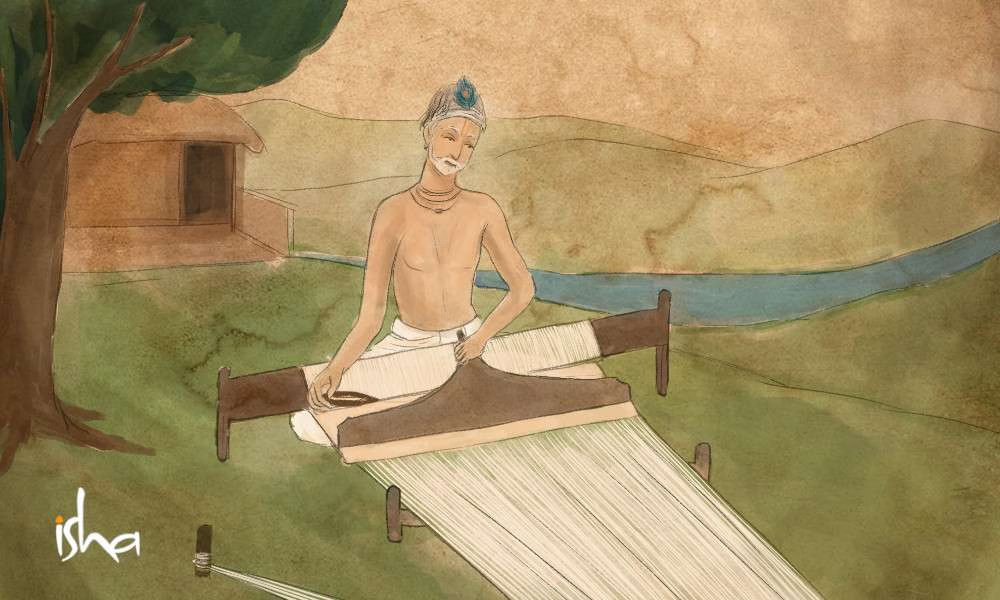
Seeing the Divine in the World Around Us
Kabir's assertion, "They do not see that the world calls me by the name of God," invites us to reflect on the profound interconnectedness of existence and the divine. In this statement, Kabir challenges the boundaries of identity, suggesting that our understanding of the divine is often limited by our perceptions and societal constructs. This matters deeply, as it calls us to reconsider how we engage with the world and the divine presence that permeates it.
At its core, this quote speaks to the mystery of identity and the divine. It urges us to look beyond the surface of our experiences and recognize the sacredness that exists within the mundane. Kabir's words resonate with a timeless truth: that the divine is not separate from the world but is intricately woven into the fabric of our everyday lives. This realization can transform our understanding of both ourselves and the world around us.
The image / the metaphor
The imagery in Kabir's quote is striking, as it evokes a sense of intimacy between the individual and the divine. The phrase "the world calls me" suggests an active relationship, where the divine is not merely an abstract concept but a living presence that engages with us. The choice of the word "calls" implies an invitation, a beckoning to recognize the sacred in our surroundings. This evokes a felt sense of longing and connection, urging us to listen and respond to the divine whispers that permeate our lives.
Diving deeper into the metaphor, we can see that Kabir is not just speaking of a personal identity but of a collective consciousness that recognizes the divine in all things. The world, in this context, becomes a mirror reflecting the divine essence that resides within each of us. This understanding transcends individualism, inviting us to see ourselves as part of a larger tapestry of existence, where every thread is imbued with the sacred. The challenge lies in our ability to perceive this truth amidst the noise and distractions of daily life.
In the speaker's tradition
Kabir's teachings are rooted in the bhakti tradition, which emphasizes devotion and love for the divine as a means of realizing one's true nature. Concepts such as bhakti, or devotion, and dharma, or righteous living, are central to understanding his perspective. In bhakti, the relationship between the devotee and the divine is characterized by love and surrender, where the individual seeks to dissolve the ego and merge with the divine essence. This aligns with the notion of kenosis, the self-emptying of one's own will to make space for the divine presence.
In the context of Kabir's quote, we can draw parallels to the Buddhist concept of sunyata, or emptiness, which invites us to recognize the interconnectedness of all beings. Just as Kabir suggests that the world reflects the divine, sunyata teaches us that our identities are not fixed but fluid, shaped by our relationships and experiences. This understanding can lead to a profound sense of compassion and empathy, as we begin to see the divine in others and ourselves. The essence of Kabir's message resonates with the teachings of the Gita, where Krishna reveals that all beings are manifestations of the divine, urging us to see beyond the illusion of separateness.
Living the teaching
Consider a modern scenario where this teaching can be applied: a bustling city street filled with people rushing by, each absorbed in their own world. In such moments, it is easy to overlook the divine presence in those around us. However, if we take a moment to pause and recognize that each person is a reflection of the divine, our interactions can shift dramatically. A simple smile or a kind word can become an expression of that recognition, transforming mundane encounters into sacred moments.
In a more personal context, think about a challenging relationship in your life. When we view others through the lens of Kabir's teaching, we begin to see them not just as individuals with their own struggles but as manifestations of the divine. This perspective can foster compassion and understanding, allowing us to navigate conflicts with greater empathy. By recognizing the divine in others, we can cultivate deeper connections and heal the wounds that often separate us.
A reflection
As we contemplate Kabir's profound insight, we are invited to ask ourselves: How do I perceive the divine in my daily life? This question encourages us to explore the ways in which we might be overlooking the sacred in our interactions and experiences. By reflecting on this, we can begin to shift our awareness, allowing the world to reveal its divine nature to us in new and transformative ways.




Join the BrightStar Community
Stay connected with daily inspiration, event announcements, and community wisdom