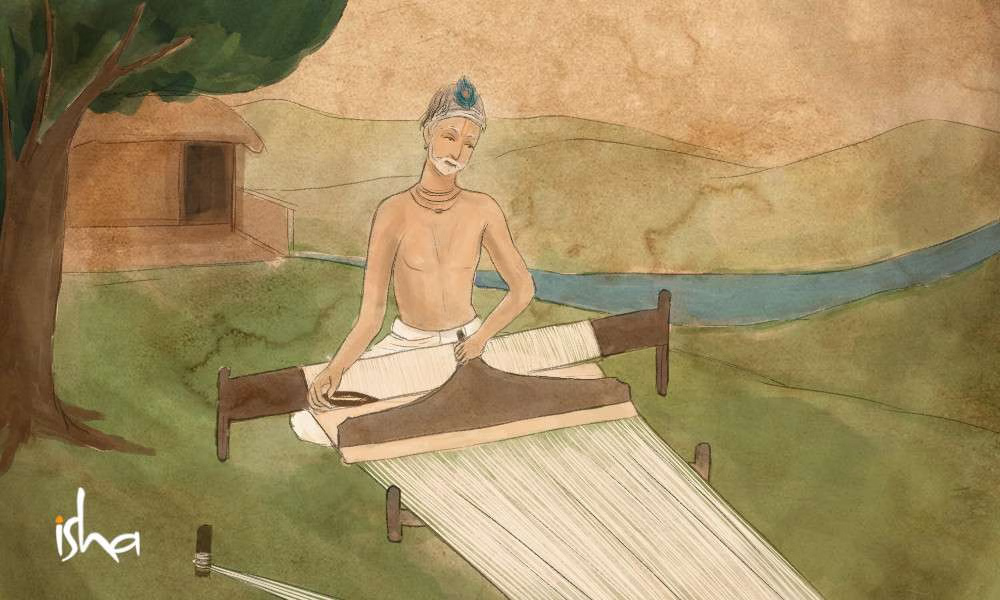
The Longing for the Beloved: A Journey Home
In the poignant words of Kabir, "My body and my mind are grieved for the want of Thee; O my Beloved! come to my house." This expression of yearning encapsulates a profound spiritual longing that transcends mere desire. It speaks to the deep ache within us for connection, for the presence of the divine, and for a sense of belonging that often feels just out of reach. Kabir's plea is not just a personal lament; it resonates with the universal human experience of seeking something greater than ourselves, something that can fill the void we often feel in our lives.
At its core, this quote invites us to reflect on the nature of our own longings and the ways in which we seek fulfillment. It suggests that our physical and mental states are intertwined with our spiritual aspirations. The call to the "Beloved" is a call to recognize that our true home lies not in the material world but in a deeper, more intimate relationship with the divine. This longing is not merely a passive feeling; it is an active pursuit, a heartfelt invitation for the divine presence to dwell within us and guide our lives.
The image / the metaphor
The imagery in Kabir's quote is rich and evocative. The phrase "my body and my mind are grieved" conveys a sense of profound sorrow and yearning, suggesting that both the physical and mental realms are affected by this absence. The use of "Beloved" introduces a personal and intimate relationship, evoking the idea of a lover who is deeply missed. The metaphor of "coming to my house" symbolizes the desire for the divine to inhabit our very being, to transform our lives into sacred spaces where love and connection flourish.
In the speaker's tradition
Kabir's teachings are deeply rooted in the bhakti tradition, which emphasizes devotion and love for the divine as the path to spiritual realization. In this context, the longing expressed in the quote can be seen as a manifestation of bhakti, where the devotee's heart aches for union with the Beloved. This longing is not merely an emotional state but a spiritual practice that leads to the dissolution of the ego and the realization of oneness with the divine. Concepts such as dharma, or righteous living, and kenosis, the self-emptying of one's own desires, are integral to understanding this longing as a transformative journey.
In the broader context of spiritual literature, Kabir's sentiments echo the teachings found in the Bhagavad Gita, where the soul's yearning for connection with the divine is a central theme. The Gita speaks of the importance of surrendering to the divine will and recognizing that true fulfillment comes from aligning oneself with a higher purpose. Kabir's call for the Beloved to "come to my house" resonates with the Gita's invitation to cultivate a relationship with the divine through devotion, love, and surrender.
Living the teaching
In our modern lives, the longing expressed by Kabir can manifest in various ways. Consider a moment when you feel disconnected from your true self or from others around you. Perhaps you are navigating the complexities of daily life, feeling overwhelmed by responsibilities and distractions. In such moments, Kabir's plea serves as a reminder to pause and reflect on what truly nourishes your spirit. It invites you to create space for the divine in your life, whether through meditation, prayer, or simply taking a moment to breathe and reconnect with your inner self.
Another application of this teaching can be found in our relationships. When we experience conflict or distance with loved ones, the longing for connection can feel particularly acute. Kabir's words encourage us to reach out, to invite the presence of love and understanding into our interactions. By recognizing that our relationships are opportunities for divine connection, we can approach them with greater compassion and openness. In this way, the longing for the Beloved becomes a catalyst for healing and reconciliation, reminding us that we are all interconnected in our search for love and belonging.
A reflection
As we contemplate Kabir's heartfelt expression of longing, we are invited to ask ourselves: What does the presence of the Beloved mean to me, and how can I create space for that presence in my life? This question encourages us to explore the depths of our own hearts and to consider the ways in which we seek connection, both with ourselves and with the divine. In this exploration, we may find that our longings are not merely personal desires but reflections of a greater spiritual truth that calls us home.




Join the BrightStar Community
Stay connected with daily inspiration, event announcements, and community wisdom