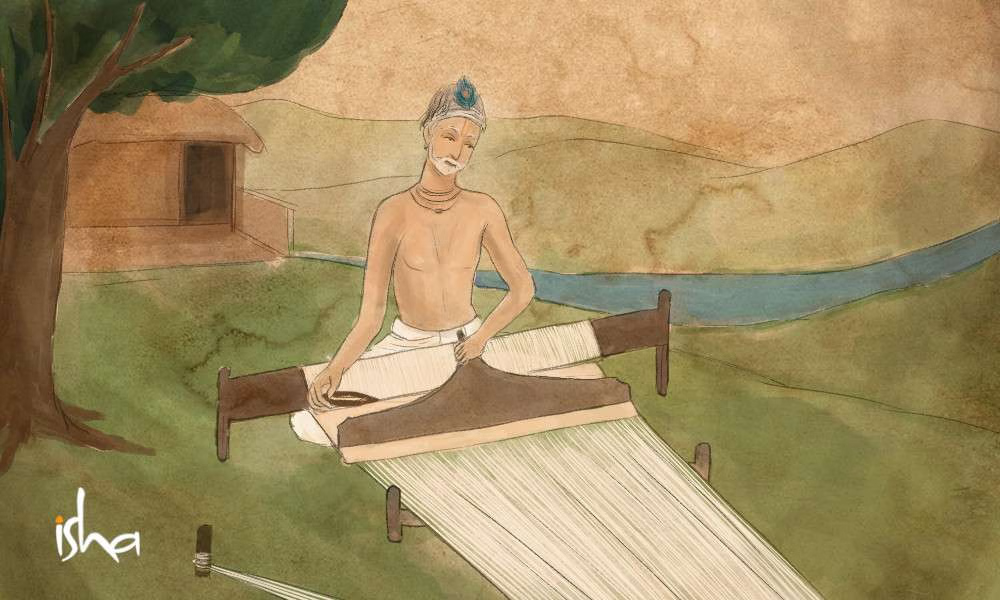
Unfolding the Banyan: The Seed of Potential Within
In the profound words of Kabir, "As the seed is within the banyan tree, and within the seed are the flowers, the fruits, and the shade — so the germ is within the body." This evocative metaphor invites us to explore the latent potential that resides within each of us, akin to the vast banyan tree that emerges from a seemingly insignificant seed. The stakes of this teaching are high; recognizing our inherent potential can lead to transformative growth, not only for ourselves but also for the world around us.
At its core, this quote speaks to the interconnectedness of existence and the latent possibilities that lie dormant within us. Just as the banyan tree embodies the promise of life, shelter, and sustenance, so too does our body harbor the essence of our true selves. Kabir's words challenge us to look beyond the surface, to delve into the depths of our being, and to acknowledge the profound potential waiting to be realized. This exploration is not merely an intellectual exercise; it is a call to action, urging us to nurture the seeds of our own becoming.
The image / the metaphor
The imagery in Kabir's quote is rich and layered, evoking a sense of wonder at the natural world. The banyan tree, with its sprawling branches and extensive roots, symbolizes stability, growth, and the interconnectedness of life. The seed, in contrast, represents the humble beginnings from which greatness can emerge. The verbs chosen—"is within"—suggest a deep, intrinsic relationship between the seed and the tree, highlighting the idea that everything we need for our growth is already present within us, waiting to be cultivated.
Diving deeper into the metaphor, we can see that the seed is not just a passive entity; it holds within it the potential for flowers, fruits, and shade, each representing different aspects of our lives. The flowers may symbolize beauty and creativity, the fruits the tangible outcomes of our efforts, and the shade the comfort and protection we can offer ourselves and others. This intricate web of potential invites us to reflect on our own lives and the myriad possibilities that lie dormant, waiting for the right conditions to flourish.
In the speaker's tradition
Kabir's teachings are deeply rooted in the bhakti tradition, which emphasizes devotion and the personal relationship with the divine. This tradition encourages individuals to seek the divine within themselves, recognizing that the essence of the divine is not separate from our own being. Concepts such as dharma, or one's duty, and prajna, or wisdom, resonate with the idea that our potential is intertwined with our purpose in life. The notion of kenosis, or self-emptying, also finds a place here, as it suggests that by letting go of our ego, we can access the deeper truths that lie within.
A relevant text that echoes this sentiment is the Bhagavad Gita, where Krishna speaks of the eternal self that exists beyond the physical body. In Chapter 2, Verse 13, he reminds Arjuna that just as the body undergoes changes, the true self remains unchanged and eternal. This aligns beautifully with Kabir's metaphor, as both teachings invite us to recognize the deeper essence within ourselves, which is capable of growth and transformation, much like the banyan tree emerging from its seed.
Living the teaching
Consider a modern scenario where this teaching can be applied: a young artist struggling to find their voice. They may feel overwhelmed by self-doubt, believing that their potential is limited by their current circumstances. However, by reflecting on Kabir's metaphor, they can begin to see that their creativity is like the seed within the banyan tree, containing the promise of beauty and expression. This realization can inspire them to nurture their artistic inclinations, explore new techniques, and ultimately blossom into the artist they are meant to be.
In a different context, think about a relationship that is facing challenges. One partner may feel unappreciated, leading to frustration and resentment. By embodying Kabir's teaching, both partners can recognize that within each of them lies the potential for understanding, compassion, and growth. By fostering open communication and empathy, they can cultivate a deeper connection, allowing their relationship to flourish like the banyan tree, providing shade and support for both individuals.
A reflection
As we contemplate Kabir's profound words, we are invited to ask ourselves: What seeds of potential lie dormant within me, waiting to be nurtured and brought to fruition? This question encourages a deep introspection, prompting us to explore the aspects of our lives that may be overlooked or underdeveloped. By engaging with this inquiry, we can begin to cultivate the fertile ground of our being, allowing the banyan tree of our true selves to emerge and thrive.




Join the BrightStar Community
Stay connected with daily inspiration, event announcements, and community wisdom